










Fall 2026

An Alchemist at Heart

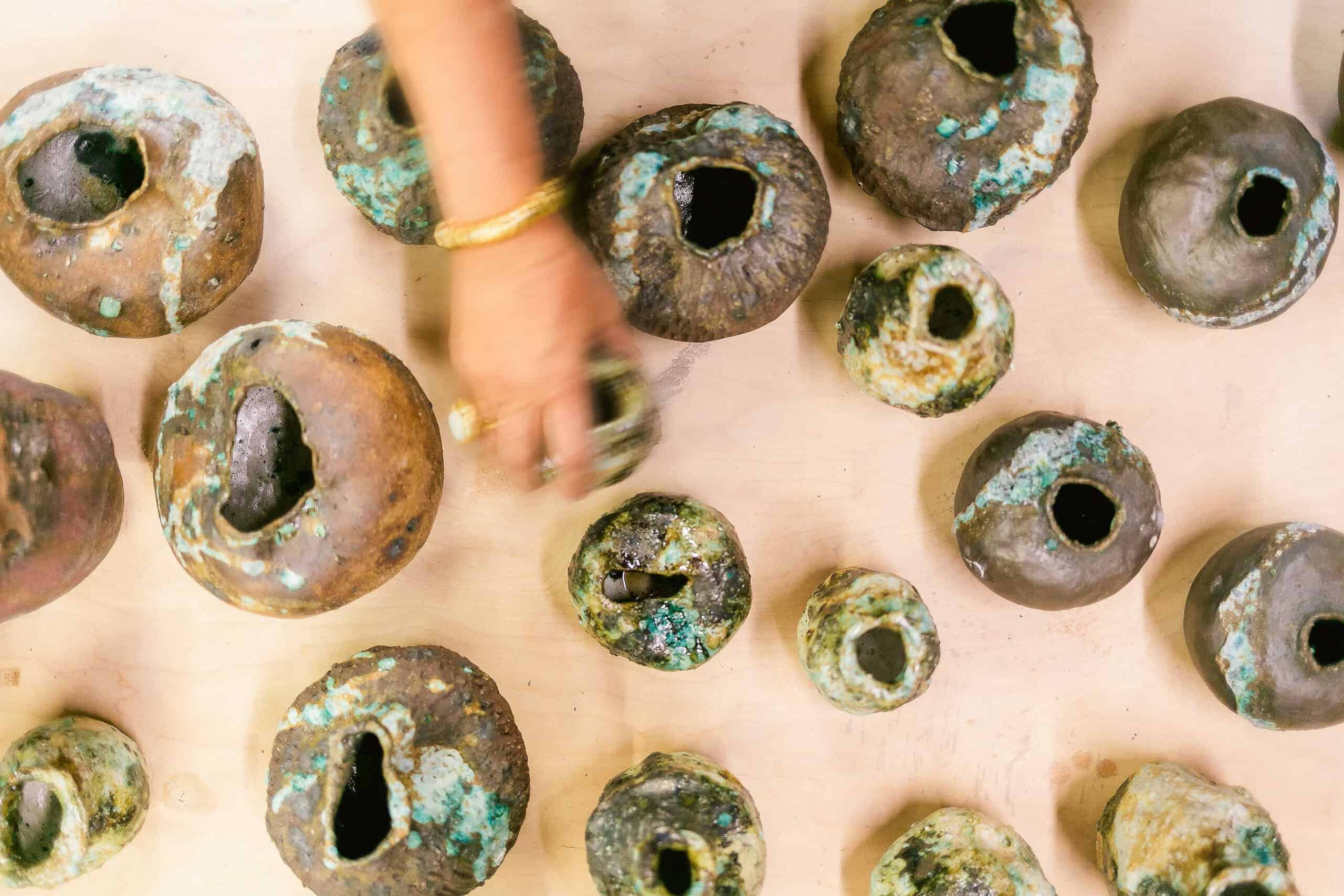
Iron-rich stoneware vessels are treated with handcrafted glaze of foraged minerals and other natural elements from her travels. Krahn’s father designed the gold ring with an opal from Australia, and offered gold, presented to him in a basket filled with nuggets by a friend in Papua New Guinea who owned a gold mine.

While practicing pediatrics part-time for the past 35 years, Kansas City ceramist Eve Krahn has always nurtured her artistic side.

Words
Susan Cannon
@susancannon1

Photos
Samantha Levi
@samstownusa

Artist
Eve Krahn
@evekrahnstudio
evekrahn.com

The love of earth, nature, art, and design has been in Eve Krahn’s DNA since childhood.

“Growing up, I was immersed in nature and a rich tapestry of cultures,” Krahn says. “My father, an exploration mineral geologist, moved our family across various landscapes—from Papua New Guinea to New Zealand and Western Australia. Holidays were spent in the Philippines, my mother’s homeland. These diverse environments became the foundation of my creative inspiration.”

Although not her first artist studio, Krahn built her first ceramics studio in this 1989 home in Leawood that she and her husband, Mike, bought in 2013. The house had languished on and off the market for three years and was being rented by a Royals relief pitcher when they discovered it.

“We had several contractors decline to work on the house because it was so weird,” Krahn says. “They didn’t think they could achieve what I was looking for. I finally found a handyman who worked hourly, and I did all the design.”

The changes were extensive.

The couple opened the wall between the completely renovated kitchen and the living room and closed off the opening between the living room and the study. They also removed a wet bar attached to the fireplace.

“We did a lot of painting throughout the house, including the fireplace, which was red, and the ceilings pink,” she notes. “All the wood was golden oak, and we painted that as well.”

That was all Phase 1. Krahn redesigned the first-floor primary bathroom several years later.

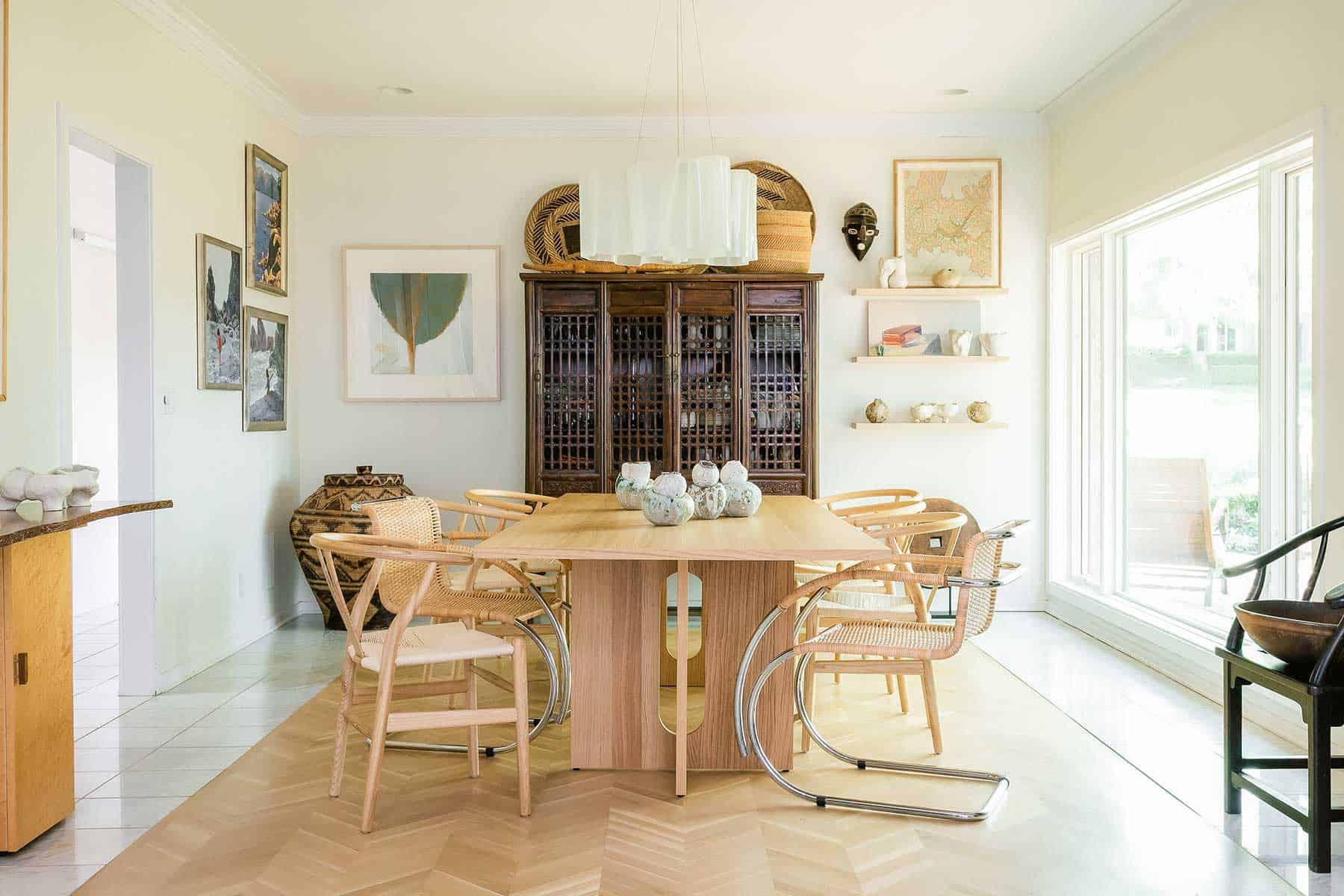
The result of her modern vision is a crisp, open airiness with maximum natural light—a perfect backdrop for Krahn’s collections of modern art, antique artifacts, textiles, her earlier paintings, and, naturally, her ceramics.

“I’ve always kept an art studio in my homes, doing mixed media and painting,” Krahn says. “My journey into ceramics began on an impulsive whim—buying a wheel without quite knowing where it would lead. Over time, my practice has evolved as I’ve explored the limitless possibilities of materials. I especially love experimenting with foraged minerals and wild clays, layering textures and creating unexpected colors and surfaces that bring each piece to life.”

Those explorations extend well beyond the studio. Years of road trips through dramatic landscapes have become part of Krahn’s artistic process, yielding the raw materials that fuel her work. A friend recently dubbed her a “mad scientist,” and the description feels surprisingly apt, given her passion, research, and knowledge of how to create her works with little to no commercially bought clay or glaze.

One wall of her studio is lined with buckets of foraged clay alongside jars filled with copper, limestone, granite slurry, and crushed oyster shells, and bins of vintage glass tile salvaged from a former architectural salvage shop in the Crossroads Arts District.

Mike even commissioned an oversized steel mortar and pestle so she could grind minerals while standing before transferring them to a hand-operated crusher, reducing rocks and minerals into fine powders for her custom glazes.

Krahn prefers the unexpected results she gets from her freeform method of hand-forming ceramics—she never liked the pottery wheel and no longer uses it. She’s fascinated by the colors the glazes make when heated.

With her constant experimentation, and a second, larger kiln that Mike surprised her with, Krahn has begun making unique taboret tables in addition to her large and small vessels, bowls, plates, cups, and even ceramic beads she strings with vintage kimono cloth scraps sourced from Asiatica.

“I want those who engage with my ceramics to feel the essence of the materials, to sense the histories embedded within them, and to connect with humanity in their raw, imperfect forms,” Krahn says. “Each piece is a tangible link to the earth’s beauty and the story it holds.’’

You may also like these articles.

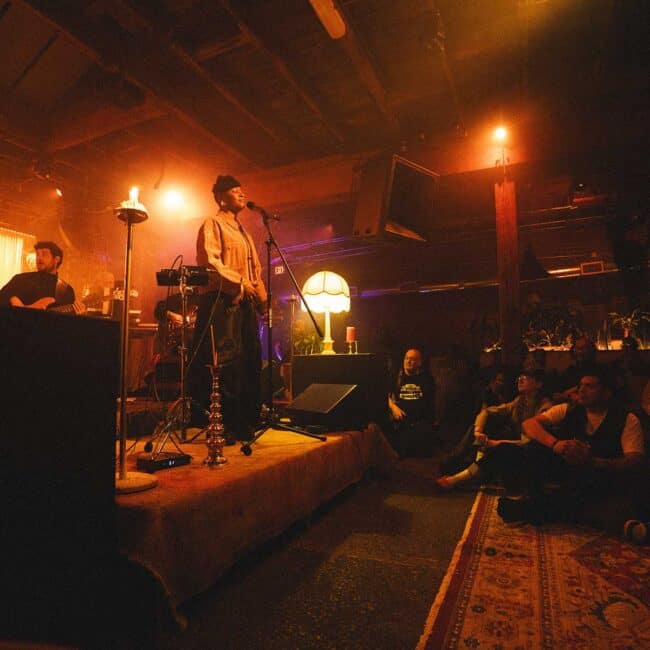
On the ITLF stage, Hailes met people’s eyes, introduced herself, and moved through the space as both headliner and someone sharing in the music. Designed to “erase that barrier and really make it a communal experience,” Living Room fostered a symbiotic exchange in which “the audience also has to make space for the performer.”

An Invitation, Not a Show 

Inside Living Room by Hailes, where a Kansas City-born performer, an immersive West Bottoms lounge, and the five visionaries behind it draw artist and audience into one soulful, shared experience.
Read More »

Leave a Reply

Your email address will not be published. Required fields are marked *